
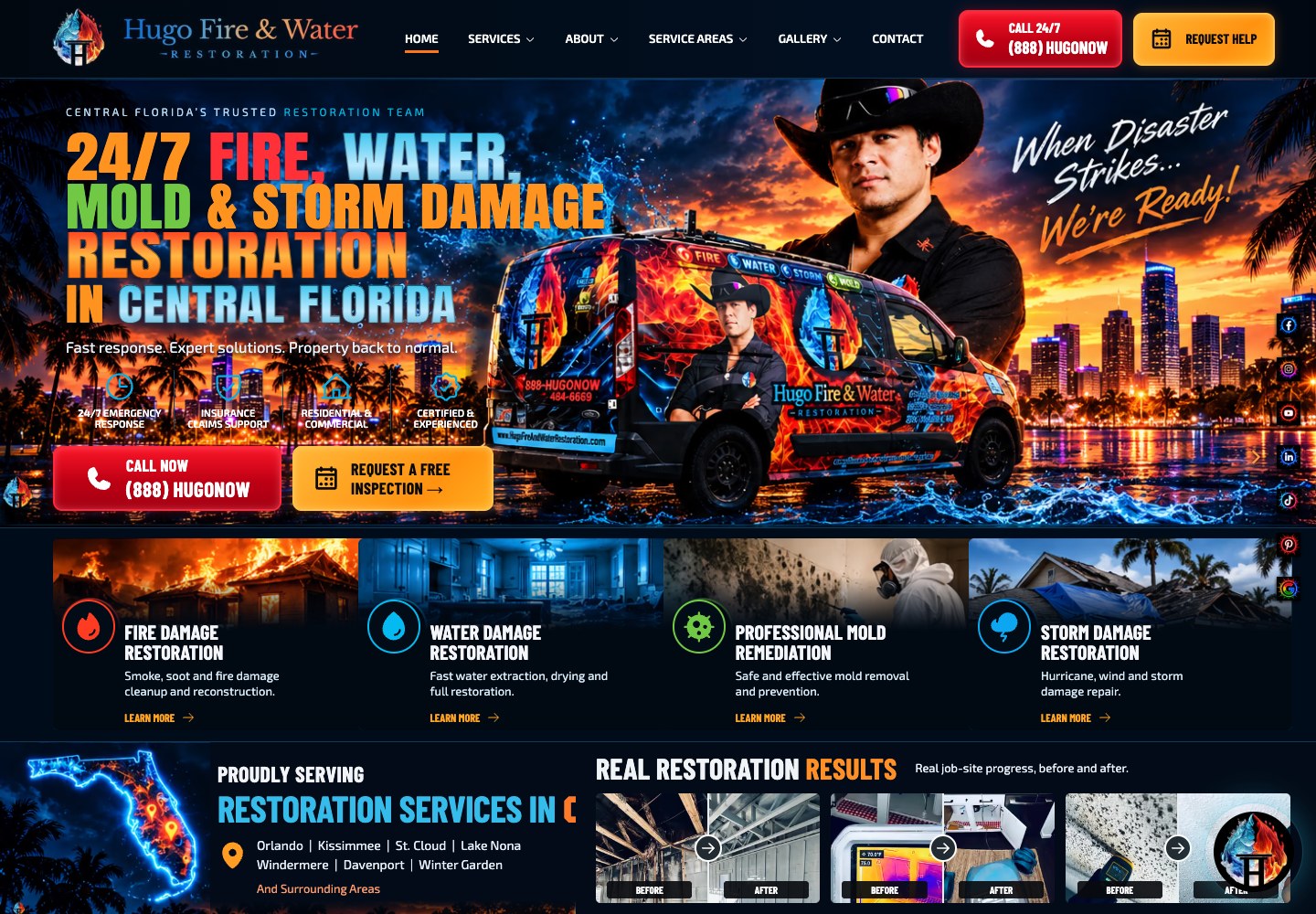
- Business
- Property restoration
- Market
- Central Florida
- My contribution
- Website design & build
- Ongoing role
- Chief Digital Officer
The design challenge
Make a complex service easier to navigate.
Water, fire, mold and storm damage create different questions. Someone arriving at Hugo’s website may need to identify the right service, check local coverage or contact the team while damage is still unfolding.
I designed and built the site around those decisions: understand the situation, find relevant information and choose a next step. The work connects the structure of the website to the practical questions a property owner brings to it.
Hugo credits my website design and build and describes my ongoing Chief Digital Officer role.
Inside the work
Three decisions. One connected experience.
Follow the customer’s questions through the finished website.
-
01 / Service architecture
Start with what happened.
What kind of help do I need?
I organized service navigation around recognizable situations: standing water, a leaking ceiling, fire damage or mold after a leak. Each connects to a relevant service, such as water extraction, roof leak cleanup or mold remediation.
A property owner may know what they can see without knowing the restoration terminology. Connecting that situation to a specific page gives the next decision a clear starting point.
Explore the service choices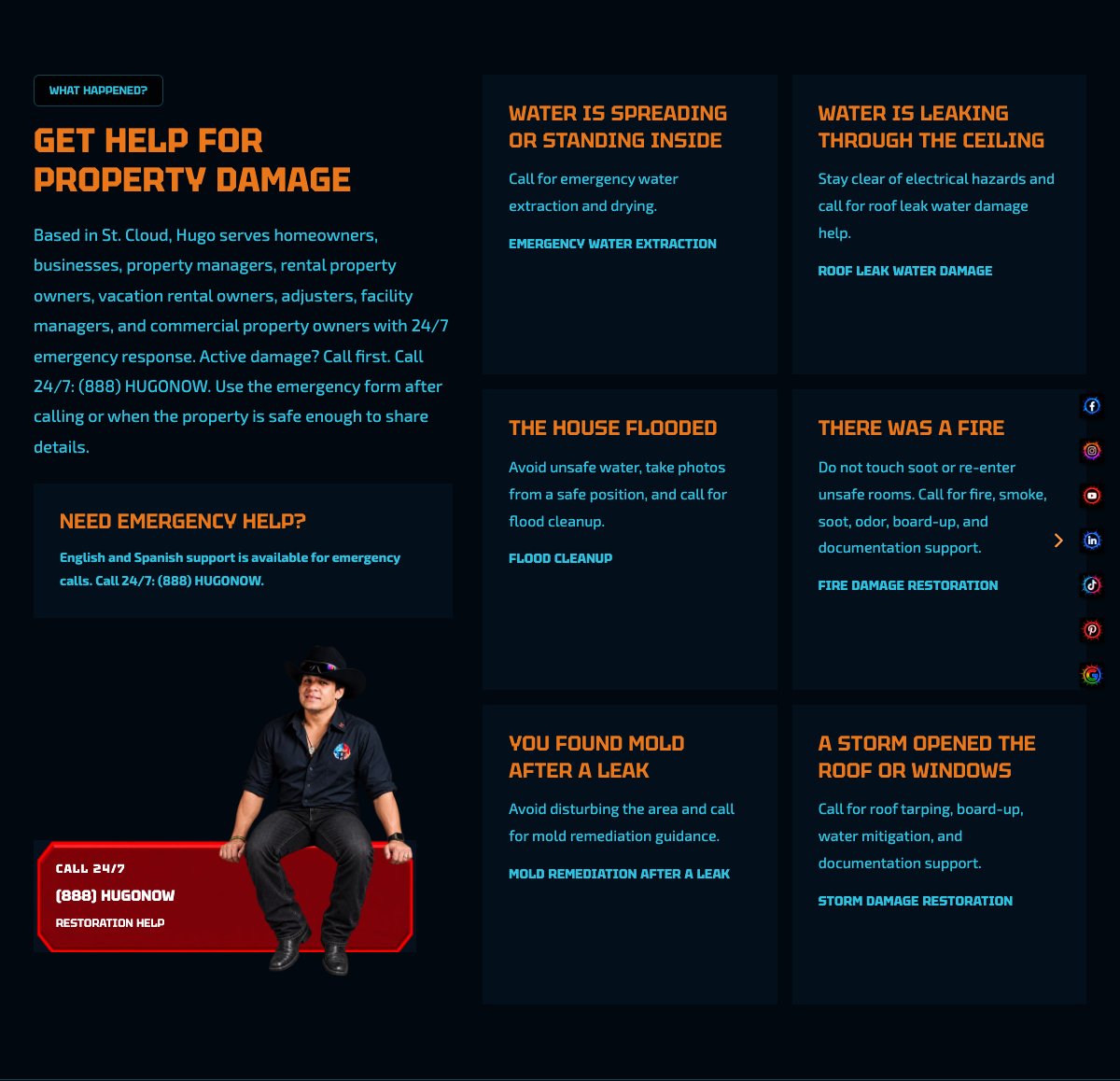
Situation-led navigation on the homepage. -
02 / Local information
Give the service a local context.
Does this team serve my area?
I connected the Central Florida service-area directory to county and city pages. A visitor can move from the region to a place such as St. Cloud or Kissimmee, then find the relevant damage-specific information.
Location is part of the service decision. Putting those connections into the site’s navigation helps visitors check the local context without piecing it together from unrelated pages.
Explore the service-area directory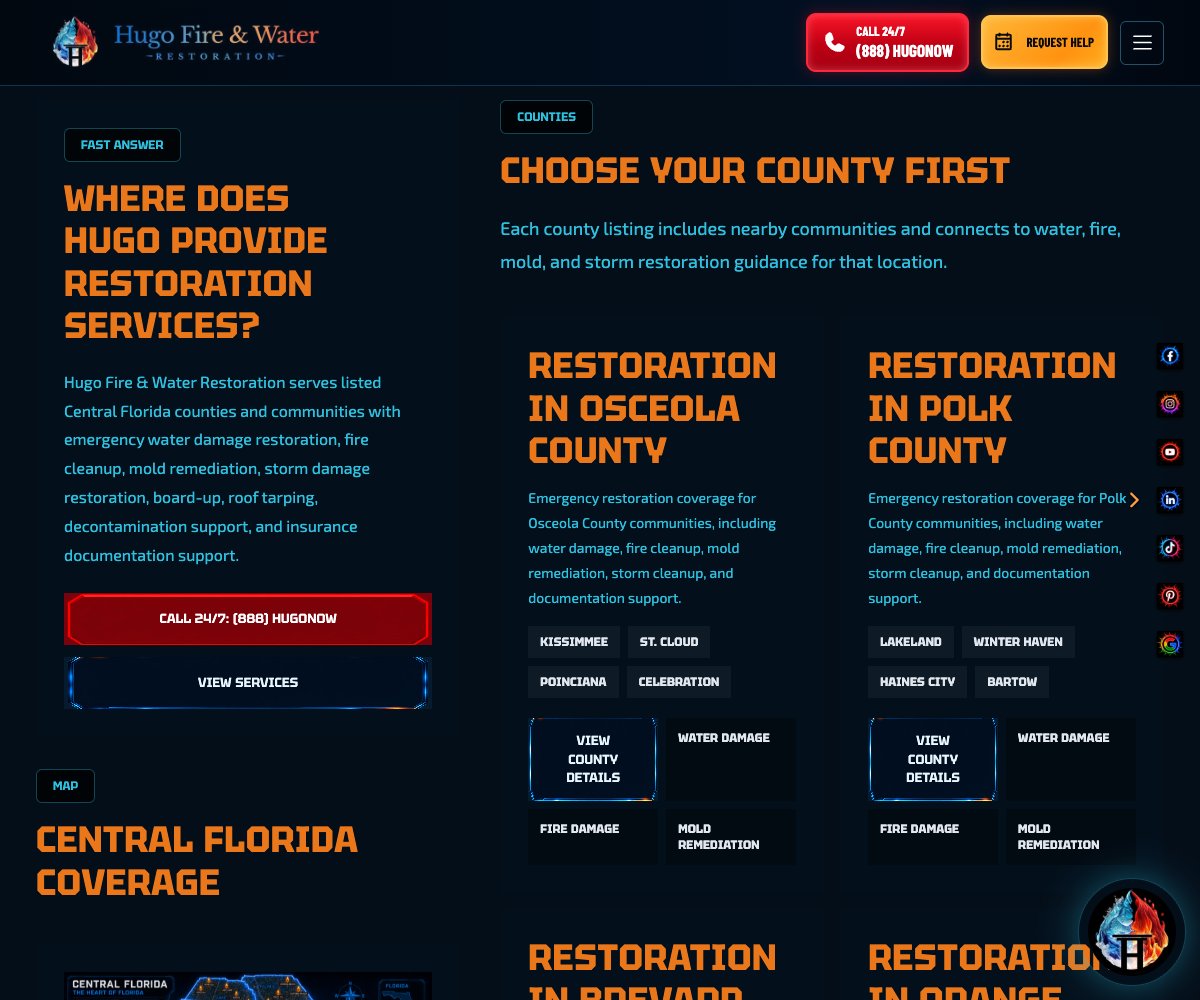
The public service-area directory. -
03 / Contact experience
Keep the next action within reach.
How do I reach someone?
I gave calling and requesting help visible places in the experience, including on a phone. The contact page brings the ways to reach Hugo’s team together; service pages also link to the relevant next step.
The website’s role is to help someone reach the people who can discuss the property and the work. Clear contact options connect the information on the page to that conversation.
Explore the contact experience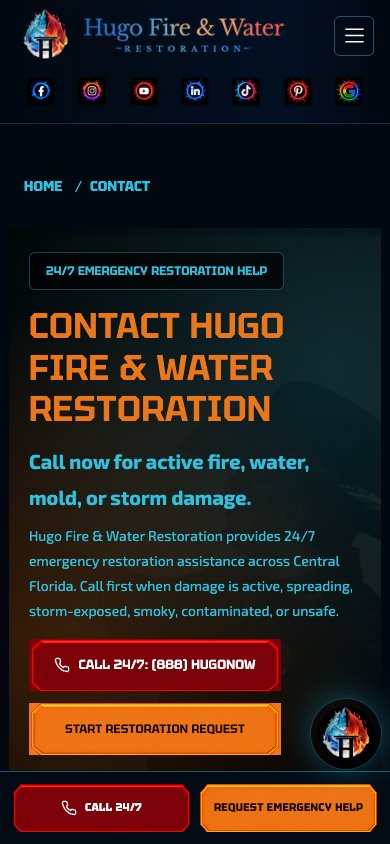
The contact experience at a mobile screen size.
Screenshots show the public website as reviewed on November 6, 2026.
The delivered experience
From a service question to a clear next step.
The website brings damage-specific guidance, local navigation and contact options into one customer journey. Each part has a practical job: explain the service, establish the local context or help someone reach Hugo’s team.
That is the work shown here: turning a complex service offering into a usable public experience.
This case study documents the website design and build. Traffic, lead and revenue impact have not been measured here.
Discuss your website and systemsCompany news · June 2026 notice
Hugo’s BusinessRate recognition.
A BusinessRate notice names Hugo as its top-ranked water damage restoration service in St. Cloud for 2026. The recognition adds customer-reputation context to the company featured here.
Read the brief for the notice’s wording, the issuer’s criteria and the distinction between customer recognition and website results.
Read the recognition brief